How Sailors Carried the Bichon Frise Around the Mediterranean
Ancient Mediterranean sailors carried small ancestral dogs on trade routes for companionship and shipboard life.

Ancient Mediterranean sailors carried small ancestral dogs on trade routes for companionship and shipboard life.

The Bichon Frise breed history traces back to Tenerife, the Canary Island linked to its early seafaring development.
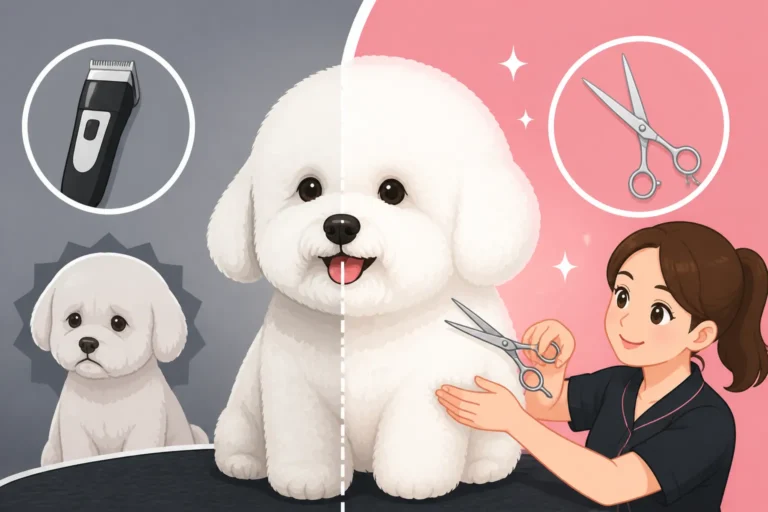
Bichon Frise grooming requires precision scissors instead of clippers to shape the dense double coat and prevent painful mats.

Bichon Frise powder puff scissoring creates a round head, column legs, and a plush body for a soft cloud appearance.

Bichon Frise housetraining routines address small bladders, weather aversions, and medical issues that cause frequent indoor accidents.

Bichon Frise housetrain difficulty stems from small bladders, high metabolism, and rapid urine production needing frequent breaks.

Bichon Frise dogs require a lifelong prescription diet to prevent painful calcium oxalate bladder stones and costly surgery.

Bichon Frise bladder stone surgery costs, calcium oxalate management, and expenses for repeat cystotomy procedures explained.

Calcium oxalate bladder stones return in over a third of Bichon Frise dogs within one year after initial surgery.
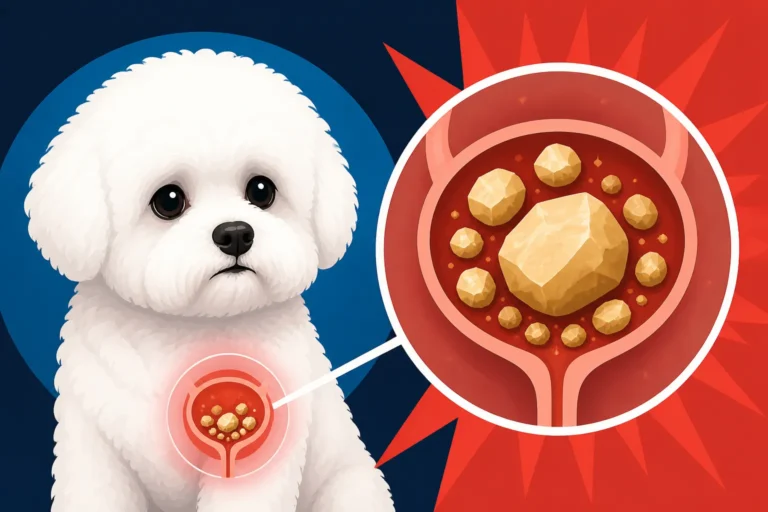
Bichon Frises form bladder stones twenty times more often than other breeds due to strong genetic and metabolic factors.

Show Bichon Frises and pet Bichons differ in coat length, grooming technique, and head styling because of practical daily maintenance.

Bichon Frise breed outline history explains how grooming, standards, and art create visual changes in appearance over time.

Bichon Frise show participation with an untrimmed coat and how careful grooming shapes the expected round outline.

French kennel authorities adopted the Bichon Frise breed standard in 1933, long before FCI recognition arrived in 1959.

European Bichon Frise grooming styles differ due to show rules, local traditions, and maintenance needs rather than official standards.

European and American Bichon Frise kennel club standards share broad similarities but differ in phrasing, measurements, and show rules.

Bichon a poil frise and Bichon Frise refer to the same dog breed, explaining French spellings and accent variations.

The Bichon Frise name history explains the 1933 French standard adoption, earlier Tenerife dog terms, and curly coat meanings.

The Bichon Frise history explains companion roles aboard ships and why the breed was never a traditional working dog.

Bichon Frise genetic diversity depends on popular ancestors, effective population size, pedigree patterns, and inbreeding coefficients.